How Local Home Service Businesses Can Get Qualified Leads
 Tomas Kauer - Moderator
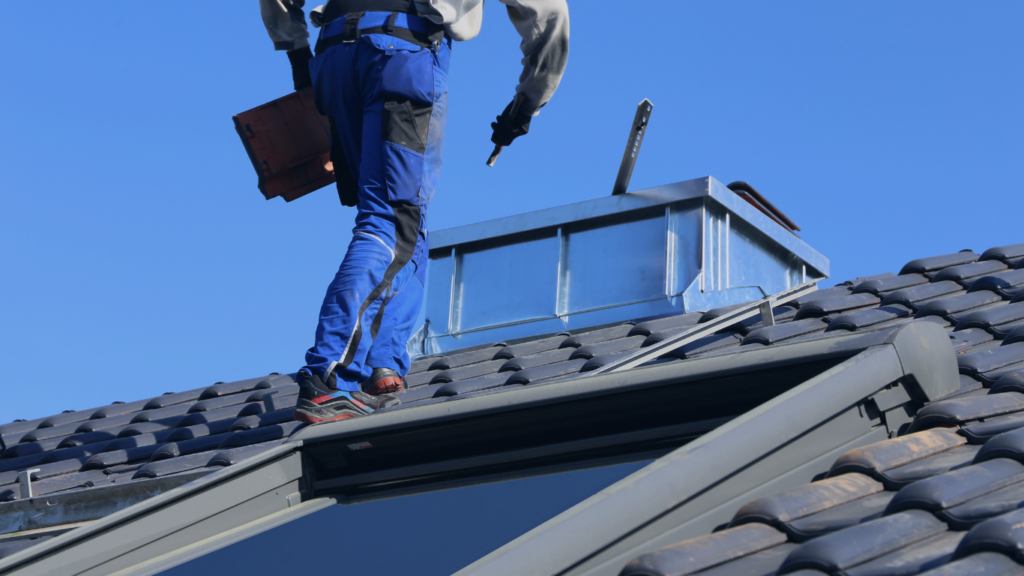
A slow pipeline is one of the most frustrating problems a home service business can face. When the leads dry up, the schedule empties out and with it, your revenue becomes anything but predictable.
The contractors who stay booked year-round have one thing in common: they don’t depend on any single source of work. They spread their bets across multiple channels organic, paid, and referral-based so when one slows down, the others pick up the slack.
We’ll also show you how a homeowner matching service like Trusted Home Quotes can supplement your existing pipeline connecting you with high-quality leads from homeowners who are actively looking to get projects done.
1. Local SEO
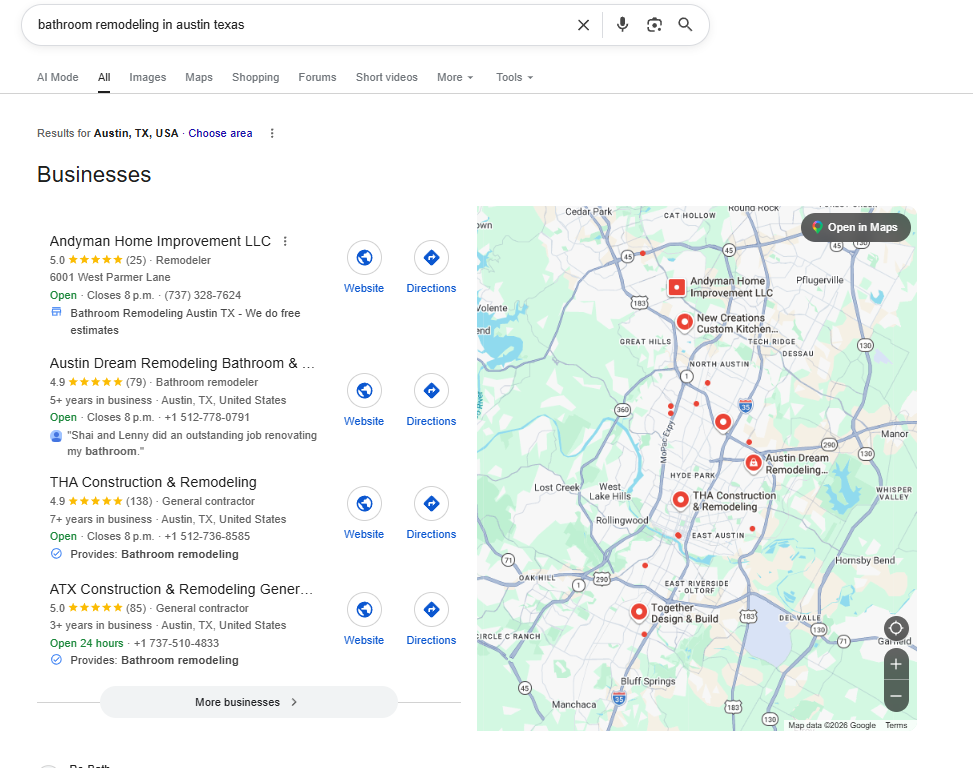
When a homeowner opens Google and types “bathtub refinishing near me” or “walk-in shower installers [city],” you want your business appearing in both the map pack and the organic results below it. That’s what local SEO is built to do and it’s the foundation every other marketing channel builds on top of.
Google weighs three things when ranking local businesses: relevance (does your listing match what was searched?), distance (how close are you to the person searching?), and prominence (how well-known and reviewed is your business online?). Getting all three right takes consistent effort across a few key areas:
- Claim your Google Business Profile and fill it out completely accurate hours, service areas, and real photos.
- Build individual location pages for every city or suburb you serve, like “Tub Refinishing in Markham” or “Window Cleaning in Whitby.”
- Keep your business name, address, and phone number consistent across directories like Yelp, HomeStars, and BBB.
- Ask for Google reviews after every job and respond to each one.
The real value of local SEO is that it compounds. Contractors who invest consistently over 12 to 18 months often end up with an organic lead pipeline that costs less per acquisition than any paid channel they’re running.
2. Google Local Services Ads (LSAs)
Local Services Ads are the first thing a homeowner sees when they search for a contractor on Google sitting above paid ads, above the map pack, showing your name, star rating, hours, and a direct phone number.
What sets them apart from standard PPC is the billing model. You pay per lead, not per click meaning you’re only charged when someone actually calls or messages you through the ad. Got a spam call or a lead that’s clearly outside your area? Dispute it, and Google will usually refund the charge.
To get the most out of LSAs:
- Complete the Google Guaranteed background check and license verification early. The badge it unlocks meaningfully improves your click-through rate.
- Your review count and recency matter here more than almost anywhere else. LSAs heavily favor businesses with a steady flow of recent 4.5+ star ratings.
- Speed matters respond to every lead within 5 to 10 minutes. Google monitors your response time and uses it as a ranking factor.
- Dispute junk leads without hesitation. It keeps your real cost per qualified lead accurate.
3. Pay-Per-Click (PPC) Advertising
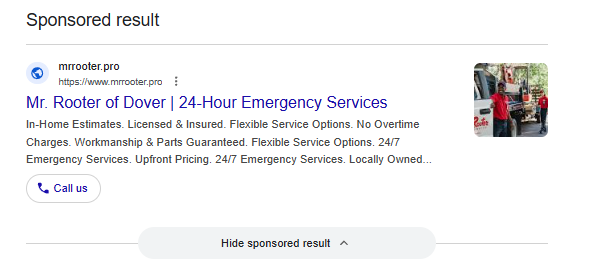
With Google Ads, you bid on specific keywords and your listing shows up in the sponsored results at the top of the page. The difference from LSAs: you pay for every click, whether or not it turns into a lead so landing page quality and campaign structure matter a lot.
PPC works best when there’s strong search intent behind the keyword. Terms like “emergency plumber,” “burst pipe repair,” or “walk-in shower installation cost” signal a homeowner with an immediate need exactly the kind of person who converts. Generic or informational searches burn the budget fast.
What separates a profitable campaign from an expensive one:
- Tight geo-targeting. Don’t pay for clicks from people 50 miles outside your service radius.
- Service-specific landing pages. Sending traffic to your homepage instead of a dedicated page kills conversions.
- A solid negative keyword list. Block searches like “DIY,” “how to,” and “jobs” before they eat your budget.
- Call tracking numbers tied to specific keywords so you can see which searches are actually generating calls.
4. Partner With Homeowner Matching Services Like Trusted Home Quotes
Running a contracting business means juggling the actual work and finding the next job at the same time. Most lead generation strategies demand time, budget, and consistency before they pay off for contractors who are already busy or just getting established, adding another marketing channel to manage isn’t always realistic. Partnering with a homeowner matching platform gives you an additional source of high-quality leads without the effort of sourcing them yourself.
Trusted Home Quotes (THQ) brings in homeowners through multiple traffic sources actively researching projects like walk-in showers, bathtub refinishing, window cleaning, and fence installation. They read through the cost guides, weigh their options, and submit a form to get quotes from contractors in their area. That’s where you come in.
Here’s how the process works:
- Tell Us About Your Business Let us know your service area, the types of jobs you take on, and what makes a good lead for you.
- Get Matched with Homeowners We send you leads from homeowners in your area who are actively researching and ready to get quotes.
- Choose the Leads You Want Review each incoming lead and only pay for the ones that fit your business.
- Get the Job Follow up fast, bring your best offer, and close the work. We handle the matching, you handle the rest.
The economics make sense for most contractors. A walk-in shower lead might cost $40 to $80 on a job worth $8,000 to $15,000. A bathtub refinishing lead might run $20 to $40 on a $600 to $1,000 project. Close one in three or four leads and you’re well ahead of what most paid advertising returns.
The homeowners coming through THQ have already done their research. They’re not browsing, they have a project in mind, often a budget, and they just need to find the right contractor. That’s a very different conversation than a cold click from a Google ad.
It’s a straightforward way to keep your pipeline moving especially during slow seasons, when you’re rolling out a new service, or when you’re trying to break into a market where your name isn’t known yet.
5. Add Interactive Website Chat
Most homeowners who land on your website and can’t quickly find what they’re looking for will just leave. A live chat widget gives them a faster, lower-effort way to get an answer, no lengthy contact forms, no digging through service pages. That reduction in friction can make a real difference in how many visitors actually turn into leads.
Chat also works outside business hours. A homeowner researching a bathroom remodel at 10 p.m. on a Sunday can still reach out, leave their contact info, and get a follow-up from your team the next morning instead of bouncing to a competitor who made it easier to get in touch.
A few things that make chat worth installing:
- Pre-load automated responses for your most common questions, service areas, pricing ranges, availability so homeowners get something useful even when you’re offline.
- Capture a name and phone number early in the conversation so you can follow up if they drop off.
- Put the widget on every page, not just the homepage, especially your service and pricing pages where buying intent is highest.
6. Facebook Lead Ads
Facebook Lead Ads remove the biggest drop-off point in most ad funnels: the click to an external page. When a homeowner taps your ad, a form opens directly inside Facebook or Instagram pre-filled with their name, email, and phone number from their profile. Two taps and you’ve got a lead.
This format works particularly well for project based services walk-in showers, kitchen remodels, window replacement, fencing where homeowners aren’t necessarily searching but will respond when the right offer shows up in their feed.
What makes these ads actually perform:
- Strong visuals do the heavy lifting. Before-and-afters, short video clips, and install time-lapses consistently outperform text-based creative.
- Give people a reason to act on a free in-home estimate, a limited-time discount, or a financing option.
- Short forms convert better. Name, phone, ZIP, and one qualifying question is usually enough.
- Follow up within 15 minutes. Unlike search leads, Facebook leads weren’t actively looking the longer you wait, the colder they get.
7. Referral Programs
Ask most contractors what their best leads look like, and referrals come up every time. A homeowner who was sent to you by a neighbor or a friend arrives with trust already built. They’re not shopping around, they’re just confirming you’re available.
The problem isn’t that referrals don’t happen, it’s that most businesses leave them entirely to chance. Satisfied customers do spread the word on their own, but not with the frequency or consistency needed to actually build a pipeline around it.
A simple referral program that works:
- Give people something concrete for sending a referral $50 off their next service, a $100 gift card, or a cash incentive for every referred customer who books.
- Lower the effort. A referral card, a shareable link, or a short email they can forward makes it easy to actually follow through.
- Have your crew mention the program at the end of every job it’s the moment when satisfaction is highest and the ask lands best.
- Check in with past customers every 6 to 12 months. A simple reminder that you appreciate referrals is enough.
8. Online Reviews and Reputation Management
Reviews don’t generate leads on their own but they make everything else work better. Two identical businesses running the same ads and the same SEO will see very different results if one has 200 reviews at 4.8 stars and the other has 20 at 4.2. The reviews are the tiebreaker.
Two things matter most:
- Volume. A high review count signals credibility to both Google and homeowners. Every happy customer is an opportunity to make asking part of the process.
- Recency. Reviews from the last 90 days carry more ranking weight than older ones. A slow, steady stream beats a one-time push every time.
The simplest way to get more reviews: send a text to the homeowner within an hour of finishing the job, with a direct link to your Google Business Profile. That single touchpoint converts 3 to 5 times better than an email sent the next day.
9. Content Marketing and Cost Guides
Before a homeowner reaches out to a single contractor, most of them spend days or weeks doing their own research reading cost guides, watching videos, comparing materials and timelines. If your website shows up during that window with content that actually helps them, you’re already the most credible option in the room by the time they’re ready to get a quote.
The content types that perform best for home service businesses:
- Cost guides with real, local price ranges, not the generic national averages homeowners have already seen everywhere else.
- Comparison pieces like “Tub refinishing vs. tub replacement: which one actually makes sense for your bathroom?”
- Project walkthroughs that set expectations, like “What happens during a 3-day bathtub refinishing project.”
- FAQ pages that answer the questions homeowners are already typing into Google, with answers that naturally lead back to your services.
10. Create Your Own Facebook Group
A Facebook business page is a one-way broadcast. A Facebook group is a community and the difference in how homeowners engage with each one is significant. A well-run group builds the kind of trust that turns members into customers and customers into referral sources, often long after they first joined.
The key is to not treat it like an ad channel. Homeowners join groups to learn and connect, not to be sold to. If every post is a promotion, people tune out. Keep the focus on content that’s actually useful:
- Answer the questions homeowners in your niche ask most often.
- Post before-and-after photos from recent projects.
- Share behind-the-scenes content installed in progress, materials you use, your crew at work.
- Offer seasonal advice, cost breakdowns, and maintenance tips relevant to your area.
Done consistently, the group becomes the place local homeowners go when they have a question about a project. And when they’re ready to hire someone, you’re the obvious call.
11. Local Service Website Pages
A single “Service Areas” page that lists every city you work in won’t rank for anything. If you operate across multiple locations, each one needs its own dedicated page built around the specific terms homeowners in that area are actually searching.
A plumber covering three suburbs should have three separate pages. A refinishing contractor serving five neighborhoods should have five. When a homeowner finds a page built specifically for their city, they’re far more likely to trust that you actually work there and reach out for a quote.
Two quick ways to find the right keywords before you build:
- Use Google autocomplete. Start typing your service name into the search bar and pay attention to the city and neighborhood terms it suggests alongside it.
- Check the related searches at the bottom of the results page after searching your main keyword. Those are the actual queries homeowners in your area are typing.
Build each page with original content: local pricing, real project examples, customer reviews, and references to nearby landmarks. Duplicating the same page with just the city name swapped out won’t rank and can actively drag down the rest of your site.
12. Email Marketing to Past Customers
Your past customer list is the most underused asset in most home service businesses. Someone who’s already hired you, already trusts your work, and already knows your name is far easier to convert than someone who’s never heard of you. And yet, most contractors never follow up.
A simple email program worth running:
- Seasonal service reminders/furnace tune-ups going into fall, AC checks before summer, gutter cleanings ahead of winter.
- Helpful content from your blog: cost guides, how-tos, and project walkthroughs that keep your name top of mind.
- Occasional promotions on related services. A homeowner you refinished a tub for two years ago might be ready for a walk-in shower conversion now.
- An annual check-in that simply says you’re still around and still appreciate referrals.
Grow Your Business With Trusted Home Quotes
Lead generation is the one part of running a home service business that never goes on autopilot. Let the pipeline run dry and everything else stalls. Most of what’s covered in this guide works but it takes time, consistency, and a marketing skillset most contractors are too busy to build.
Working with Trusted Home Quotes takes the marketing side off your plate. You get connected directly with homeowners in your area who are already researching a project and ready to talk to someone. Less time on Google Ads, more time doing the work.
Start with one or two channels from this list, see what gets traction, and build from there. A reliable lead pipeline isn’t built by doing everything at once, it’s built by finding what works and staying consistent with it.
The post How Local Home Service Businesses Can Get Qualified Leads appeared first on Entrepreneurship Life.